Structures of Belonging
Karl Singporewala and Suminder Virk
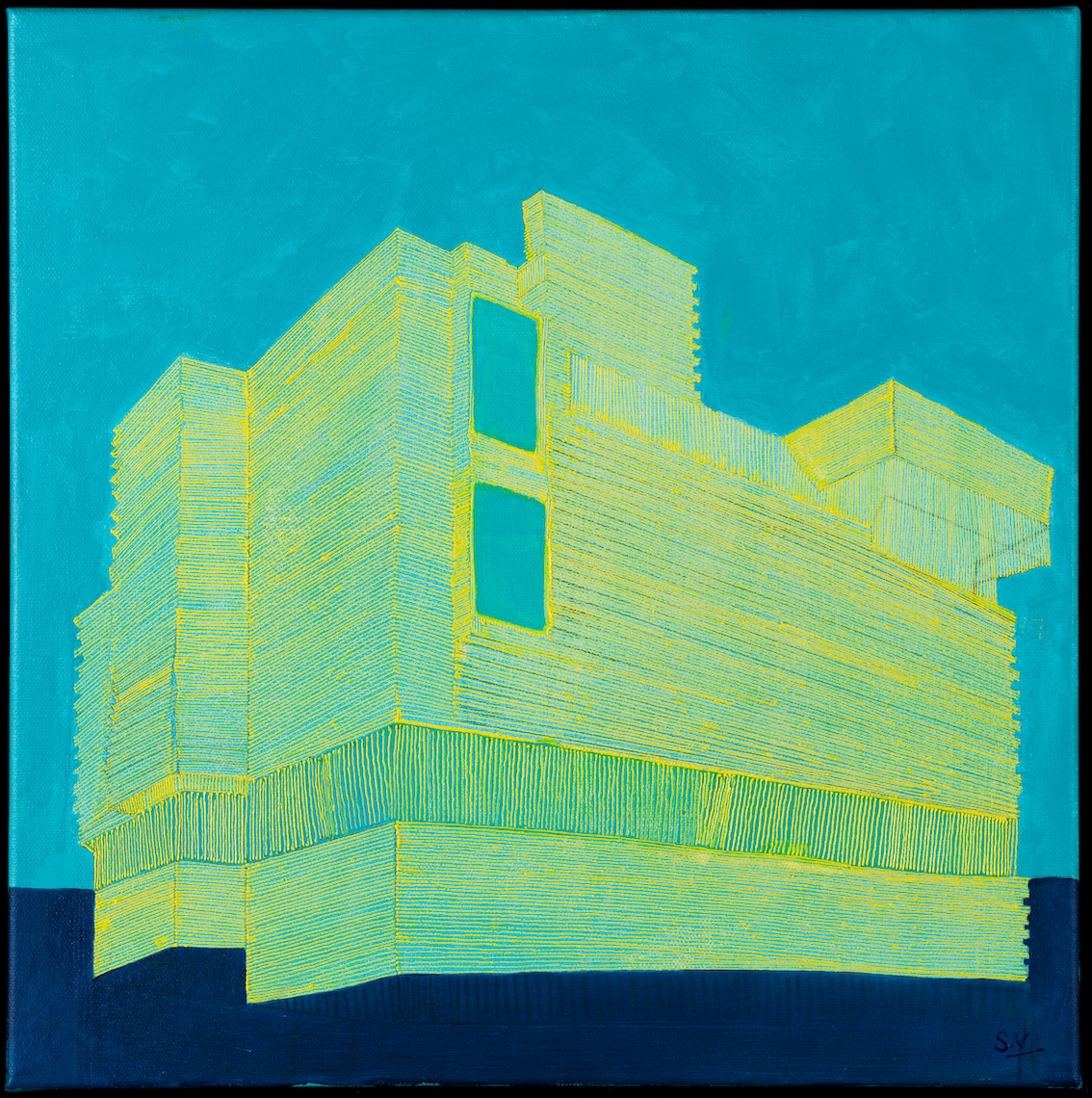
Runjeet Singh Gallery is delighted to present Structures of Belonging, an exhibition centring the role of architecture in forming and transmitting cultural legacies. Spotlighting the work of Karl Singporewala and Suminder Virk, the exhibition explores how architectural sites operate not simply as physical structures, but as emotional and psychological spaces, where identity is preserved and reimagined.
Karl Singporewala’s sculptural objects infuse architectural forms with stories of family, faith, and culture, highlighting how these structures can come to embody community and belonging across generations and societies. An architect by training, Singporewala employs meticulously detailed geometric shapes and bright, primary colours to distil the core beliefs of his Zoroastrian faith into a visual language. Playing with perspective and scale, Singporewala’s use of scale model figures transforms his sculptures into vast, temple-like structures, evoking the weight of the historical and cultural legacies they contain.
Suminder Virk’s paintings transform the sharp angles, clean lines, and repetitive geometry of Brutalist architecture into abstracted scenes of warmth and vibrancy. Inspired by her home city of Chandigarh (an Indian city designed by Swiss-French architect, Le Corbusier), Virk’s vividly coloured works embody a fusion of Indian and European influences. She creates intricate linear surfaces by piping paint with a mehndi cone, that transforms anonymous concrete forms into spaces of intimacy and lived experience, exploring what it means to belong to more than one place at once.
Structures of Belonging brings together two distinct artistic practices to examine architecture as a manifestation of memory and identity. Through sculpture and painting, Singporewala and Virk explore how experiences of migration and diaspora shape relationships to place, revealing belonging to be something unfixed - continually inherited, negotiated, and reconstructed across generations.